About the Course
This course provides a comprehensive understanding of the full grants lifecycle, from identifying
funding opportunities to proposal development, implementation, compliance, and reporting.
Participants will gain practical skills to effectively manage donor-funded projects, ensure
accountability, and maximize the impact of grant resources. The course emphasizes compliance,
financial stewardship, and results-driven project execution in line with donor requirements and
organizational goals.
It is designed to equip professionals with the tools needed to manage grants efficiently while
maintaining transparency and delivering measurable outcomes.
Target Participants
-
● Program and Project Managers
-
● Grants and Fundraising Officers
-
● Finance and Accounting Professionals
-
● NGO and Nonprofit Staff
-
● Monitoring and Evaluation (M&E) Officers
-
● Compliance and Audit Officers
-
● Development Practitioners and Consultants
What You Will Learn
-
● Understand the full grants management lifecycle
-
● Identify and secure funding opportunities
-
● Develop compelling and compliant grant proposals
-
● Manage grant budgets and financial reporting
-
● Ensure donor compliance and regulatory adherence
-
● Monitor and evaluate project performance
-
● Strengthen accountability and transparency in grant use
-
● Manage risks and ensure sustainability of funded projects
Course Duration
-
● Face-to-face workshops: 5 days
-
● Virtual Training: 7 days
-
LMS: Self-paced learning
Course Outline
Introduction to Grants Management
-
● Overview of grants and funding mechanisms
-
● Types of donors (government, NGOs, foundations, multilateral agencies)
-
● Grants lifecycle and key phases
-
● Roles and responsibilities in grants management
Funding Landscape and Opportunity Identification
-
● Understanding donor priorities and funding trends
-
● Researching grant opportunities
-
● Eligibility criteria and requirements
-
● Building donor relationships and partnerships
Proposal Development and Grant Writing
-
● Components of a winning proposal
-
● Problem statement and needs assessment
-
● Logical framework (Logframe) development
-
● Budget preparation and justification
-
● Writing techniques for clarity and impact
Grant Budgeting and Financial Management
-
● Principles of grant budgeting
-
● Cost allocation and allowable expenses
-
● Financial controls and accountability
-
● Budget monitoring and variance analysis
-
● Financial reporting to donors
Grant Implementation and Project Management
-
● Project planning and scheduling
-
● Resource allocation and team coordination
-
● Deliverables and milestone tracking
-
● Stakeholder engagement
-
● Documentation and record keeping
Compliance and Risk Management
-
● Donor rules and regulations
-
● Legal and ethical considerations
-
● Risk identification and mitigation
-
● Internal controls and audit readiness
-
● Fraud prevention and accountability
Monitoring, Evaluation, and Learning (MEL)
-
● Setting indicators and performance metrics
-
● Data collection and analysis
-
● Tracking outputs, outcomes, and impact
-
● Reporting results to donors
-
● Learning and continuous improvement
Reporting and Communication
-
● Narrative and financial reporting
-
● Donor communication and relationship management
-
● Progress updates and success stories
-
● Managing donor feedback
Grant Closeout and Sustainability
-
● Grant closure procedures
-
● Final reporting and audits
-
● Asset management and handover
-
● Sustainability planning for projects
-
● Lessons learned and knowledge transfer
Practical Case Studies and Applications
-
● Real-world grant management scenarios
-
● Common challenges and solutions
-
● Proposal review exercises
-
● Group discussions and action planning
Training Approach
This course will be delivered through a coaching-first approach that goes beyond traditional
instruction. Whether in our Nairobi classroom, live virtual cohorts, or through our White Label
LMS, participants engage in a safe and nonjudgmental learning environment designed for
meaningful transformation.
We focus on the individual behind the professional title, connecting with the heart before
training the mind. This approach encourages reflection, practical application, and deeper
engagement, ensuring that learning is not only understood but also internalized and applied with
confidence.
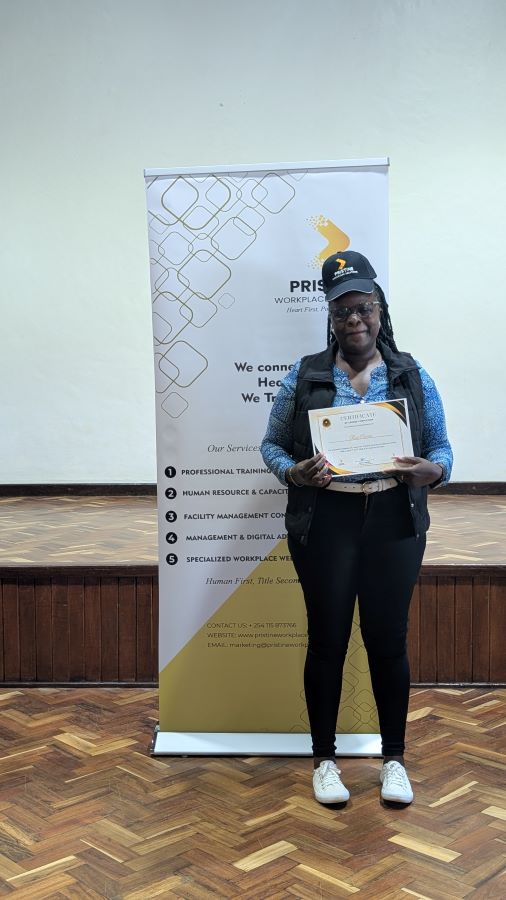
Certification
Participants will receive a certificate upon successful completion of the course, recognizing their
knowledge and practical competence.
Customized Training Solutions
This course can also be delivered as a tailor-made program, designed to address the specific
needs, priorities, and operational challenges of your organization.